
Focused Shockwave Therapy (EPAT) in Littleton, CO
Fast, proven relief for plantar fasciitis, tendon pain, and chronic injuries that haven't responded to other treatments.
What Is Shockwave Therapy?
Focused Shockwave Therapy (EPAT) is one of the most effective non-invasive treatments for chronic pain, tendon injuries, and soft-tissue conditions that haven't improved with chiropractic care, massage, or physical therapy.
At DocSpitz Performance Clinic, we use FDA-cleared Focused Shockwave Therapy to accelerate tissue healing, break up scar tissue, restore mobility, and help active adults return to the activities they love — faster.
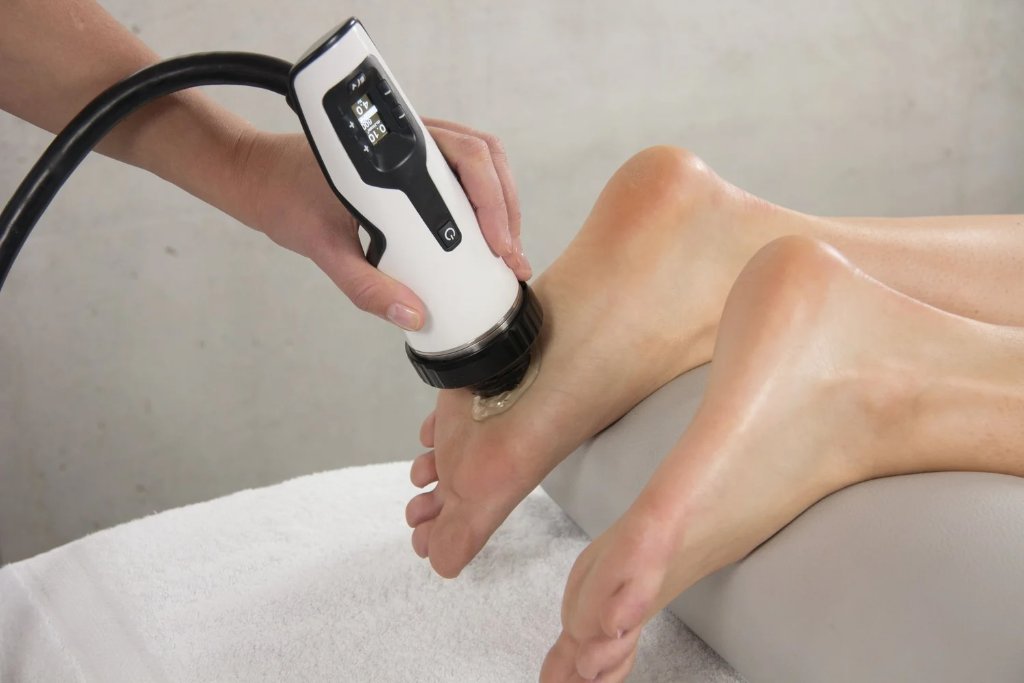
This video explains how focused shockwave therapy is used in a clinical setting to support tissue healing and recovery when appropriate.
Conditions Shockwave Therapy Treats
Foot & Ankle
- Plantar fasciitis
- Achilles tendinitis
- Heel pain
- Chronic foot strain
Elbow & Arm
- Golfer's elbow
- Tennis elbow
- Tendon irritation
Shoulder
- Rotator cuff pain
- Impingement
- Bursitis
Hip & Knee
- IT band syndrome
- Patellar tendinitis
- Gluteal tendinopathy
Other Conditions
- Chronic scar tissue
- Trigger points
- Soft-tissue adhesions
Why Shockwave Works
Shockwave Therapy delivers high-energy acoustic waves deep into injured tissue. This controlled stimulus triggers healing by:
- Breaking up scar tissue
- Increasing blood flow
- Stimulating collagen production
- Reducing inflammation
- Restoring tissue mobility
Most patients experience reduced pain within 2–4 sessions.
What to Expect
- No downtime
- No injections
- Resume activity same day
Typical plan: 1–2 sessions per week for 4–6 weeks.
Why Choose DocSpitz
Focused EPAT device (superior to radial)
Doctor-only treatments
Sports-medicine expertise
Fast results with fewer sessions
Shockwave Therapy FAQs
Straight answers to the questions patients ask most about focused shockwave therapy at DocSpitz Performance Clinic.
Focused Shockwave Therapy (EPAT) is an FDA-cleared, non-invasive treatment that delivers acoustic pressure waves into damaged tissue to stimulate blood flow, break up scar tissue, and trigger your body's natural healing response. It is used for chronic tendon and soft-tissue conditions that have not responded to other treatments.
Most patients feel mild discomfort during treatment, often described as a tapping sensation. Dr. Spitz adjusts the intensity to your comfort level, and any discomfort is temporary and typically subsides immediately after the session.
Most conditions require 3 to 6 sessions, typically scheduled 5 to 7 days apart. Dr. Spitz builds a personalized treatment plan based on your specific condition and how you respond to therapy.
Most insurance companies classify shockwave therapy as investigational and do not cover it, though HSA and FSA funds may be used. Our front desk can help you understand your options before starting treatment.
Common conditions include plantar fasciitis, Achilles tendinitis, rotator cuff pain, tennis and golfer's elbow, and chronic hip, knee, or shoulder pain that has not responded to conservative care.
Ready to move forward?
Book a visit. We'll take the time to understand what's going on and build a plan that gets you back.